Landslide Damage Investigation to Property
The Storm Event
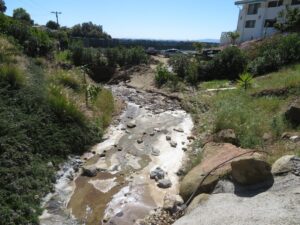
A rainstorm producing approximately 8 inches of rainfall overwhelmed drainage paths surrounding a private residence, impacting the property with high volumes of stormwater and debris. Material washed downhill during the storm from an uphill access road on the neighboring lot had been filled with loose dirt, construction debris, asphalt fragments, bricks, and rocks.
The resulting mudflow and flooding affected multiple site components, including the tennis court, front and side yards, and septic system area. Portions of the site also exhibited erosion, sinkholes, and water intrusion into buildings, undermining building components and site improvements and increasing vulnerability to future storm events.
Investigating the Damage
Following the storm, Walker performed a forensic investigation to determine the causes and extent of the damage. Out multidisciplinary team assessed conditions across multiple buildings, site areas, drainage systems, and hillside features to identify the causes and extent of damage. The investigation included field observations, moisture testing, elevation measurements, topographic drainage analysis, and review of meteorological and photographic data. On-site visual and tactile observations, wall plumbness and floor levelness measurements, and documentation of damage conditions were performed across buildings and site improvements. Drainage patterns, stormwater basins, and topography were evaluated, determining four major drainage basins contributing to runoff onto the property.
Engineering analyses calculated debris volumes, including an estimated 2,500 cubic feet of mud and debris transported onto the property and 1,300 cubic feet washed from the eroded uphill road. The investigation also identified blocked drainage infrastructure, including a culvert overwhelmed by debris from the uphill access road, and documented water intrusion and material deterioration, including wet drywall, efflorescence, blistering finishes, damaged baseboards, and compromised stucco.
Supporting Recovery
The client received a clear, evidence-based explanation of causation, linking the flood and mudslide impacts to storm intensity, topography, and debris flow from the adjacent uphill property. The findings helped the client understand long-term site and slope stability considerations by identifying high-risk erosion zones, including areas susceptible to future storm or seismic events.
The investigation also outlined prioritized repair recommendations for buildings, utilities, drainage features, fencing, and landscaped areas, supporting the client’s planning and recovery efforts. The findings equipped the client and their representatives with technical documentation useful for decision-making, potential property claims, or future legal or administrative processes.
Explore More
Related Services
Relevant Insights