Elevators are one of the safest forms of transportation.
In the United States, people take about 18 billion trips on elevators each year, yet there are only around one injury per every million rides with the majority of those occurring during maintenance and inspections, not to passengers. Behind every smooth elevator ride is a world of clever engineering, maintenance, and inspections that keep everything running safely. Let’s explore how elevators are designed with redundant safety systems, and what our vertical transportation consultants do to make sure those systems stay in top shape.
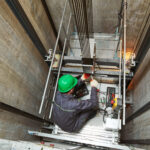
1. Multiple Ropes and Double Bottom Cylinders = Built-In Redundancy
Most passenger elevators fall into two main categories: Traction and Hydraulic. Hydraulic elevators utilize cylinders with double bottom encasements to contain the hydraulic fluid in the event of a failure to the cylinder. Modern passenger traction elevators are suspended by no less than three steel wire ropes, though most use anywhere from four to eight ropes. Depending on the size of the ropes, a single rope may be strong enough to hold the entire elevator car with a full passenger load. In short, both hydraulic and traction elevators rely on redundant safety features to ensure passenger safety.
2. Safeties To Stop the Elevator If It Over Speeds or Moves When It Shouldn’t
Traction elevators have additional built-in safety features to prevent them from free falling down the hoistway in the event of a catastrophic failure. They have a governor that uses centrifugal force to sense an overspeed condition to engage the safeties and stop the elevator gently and securely. Newer elevators also utilize an emergency braking system that stops the elevator if it senses the unintended movement of the elevator.
3. Shock Absorbers in The Pit
Even if all else failed (which is incredibly unlikely), elevators are equipped with buffers in the pit. Depending on the rated speed of the elevator the buffers will use some combination of springs and oil dampers to soften the impact in an emergency. These are similar in function to the shock absorbers in your car but engineered for the weights and impacts that may be experienced with elevators.

4. Maintenance: The Unsung Hero of Elevator Safety
All these safety systems rely on expert maintenance and inspections. That’s where Vertical Transportation Consultants come in. They work with building owners and elevator service providers to:
- Evaluate wear and tear on critical components
- Evaluate maintenance levels of the equipment
- Confirm safety tests are being performed and documented correctly
- Recommend upgrades or replacements when needed
- Verify compliance with code and performance standards
Routine checks, precise calibration, and detailed reporting keep your elevator not just functional but safe.
Elevator Safety Is No Accident
So, next time you ride an elevator, remember it’s more than just cables and buttons. It’s a highly engineered system with multiple layers of protection and an expert team behind the scenes keeping it all in motion.
If you’re responsible for elevator systems in your building, our consultants are here to help ensure everything runs smoothly, safely, and efficiently.